Who May Be at Higher Risk? Understanding the Risk Factors
Understanding Risk Factors: Who May Be More Likely to Develop Certain Health Conditions
When reading about health, science news, or personal wellness, the term “risk factor” appears frequently. Medical professionals and health researchers use it to describe traits, behaviors, or exposures that may influence the likelihood of developing a specific health condition. However, hearing that you or a family member has a particular risk factor can sometimes sound alarming, making it easy to confuse increased probability with certainty.
Understanding how health risk factors work—and how healthcare providers evaluate them—can demystify medical information and help you navigate personal health conversations with clarity. Here is an educational look at what risk factors are, how they interact, and why risk is a measure of probability rather than a guaranteed prediction.
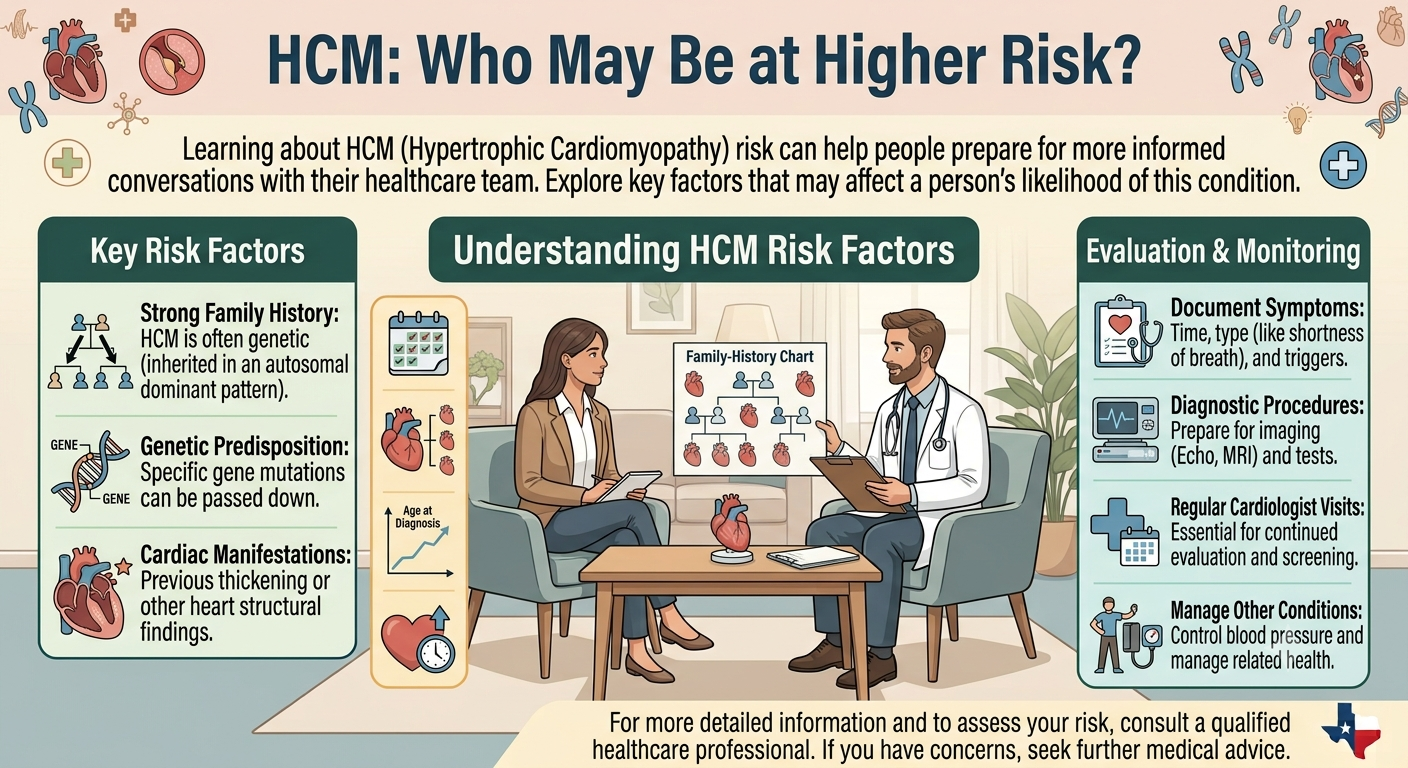
1. What Is a Risk Factor?
In health and medicine, a risk factor is any attribute, characteristic, or exposure that increases the statistical probability of an individual developing a disease or health condition.
To clearly understand this concept, it helps to distinguish between a risk factor and a cause:
-
Risk Factor: A variable associated with an increased chance of developing a condition. Having a risk factor does not mean a person will definitely develop the condition, nor does its absence guarantee that a person will avoid it.
-
Direct Cause: An event, agent, or mechanism that directly produces a specific health outcome (such as a specific virus causing an infection).
[ Risk Factor Present ] ──( Statistical Increase in Likelihood )──> Potential Condition
                                                                         ▲
                                                                         │
                        ( Not a Guaranteed Direct Outcome ) ─────────────┘
For example, driving on icy roads is a risk factor for car accidents. It increases the overall likelihood of a spinout, but driving on ice does not guarantee an accident will happen, nor does driving on dry roads completely eliminate the possibility of a collision. In the same way, medical risk factors indicate relative probability across large populations, not guaranteed outcomes for an individual.
2. Common Types of Risk Factors
Health risks are generally categorized into distinct groups based on whether they can be modified and where they originate. When looking at who is at higher risk for various health conditions, researchers evaluate several broad categories:
Unmodifiable Risk Factors
These are baseline biological characteristics that an individual cannot alter:
-
Age: As the body ages, cellular repair mechanisms naturally shift, making age one of the most common risk factors for chronic conditions like cardiovascular disease, joint wear, or cognitive changes.
-
Biological Sex: Chromosomal and hormonal differences mean certain conditions are more prevalent in one sex over another (e.g., osteoporosis or certain autoimmune conditions).
-
Family History and Genetics: Inherited genetic variations passed down through generations can influence susceptibility to specific conditions.
Modifiable Risk Factors
These involve habits, environments, and physiological states that can often be managed, adjusted, or monitored:
-
Lifestyle Habits: Nutrition patterns, physical activity levels, sleep hygiene, alcohol intake, and tobacco use.
-
Environmental Exposures: Air quality, occupation-related physical strains, ultraviolet (UV) radiation from sunlight, or secondhand smoke.
-
Underlying Health Conditions & Medication History: Existing health markers (such as blood pressure or blood glucose levels) or long-term reliance on specific prescription medications can influence overall health risk profiles.
3. Why Risk Can Vary Between People
Health is rarely governed by a single variable. When evaluating factors that affect health risk, medical science views health as an interconnected web rather than a simple straight line.
Interaction of Multiple Factors
Two people with the exact same genetic background may experience completely different health outcomes because their environments, daily routines, stress levels, and overall medical histories differ. Conversely, two people with identical routines might have different outcomes due to non-modifiable genetic traits.
       ┌─────────────────────────┐
       │   Genetics & Age        │
       └────────────┬────────────┘
                    │
                    ▼
┌───────────────────────────────────────┐
│       Combined Health Profile         │ ───> Individual Health Risk
└───────────────────────────────────────┘
                    ▲
                    │
       ┌────────────┴────────────┐
       │  Environment & Lifestyle │
       └─────────────────────────┘
Risk Assessments Are Not Predictions
A risk assessment is a population-level calculation, not a personal crystal ball. If an epidemiological study shows that a particular factor doubles the risk of a condition, that statement applies across a group of tens of thousands of people. For a single individual, a doubled risk might simply mean an increase from a 1% chance to a 2% chance—meaning a 98% likelihood remains that the condition will not occur. This distinction is vital for maintaining a realistic perspective on personal wellness.
4. Family History and Genetics
The role of family history and health risk is one of the most frequently discussed topics in modern medicine. Hearing that a condition “runs in the family” often leads people to assume that their biological fate is predetermined, but genetic susceptibility is rarely a certainty.
Single-Gene vs. Polygenic Risk
-
Single-Gene Conditions: A small number of genetic health conditions are caused by a mutation in a single gene (such as Huntington’s disease). In these specific instances, inheriting the mutated gene directly corresponds to developing the condition.
-
Polygenic / Complex Conditions: The vast majority of common health conditions—such as type 2 diabetes, high blood pressure, or heart disease—are “polygenic.” This means they involve small contributions from dozens or hundreds of different genes interacting with environmental factors.
Having a relative with a complex condition indicates a potential genetic predisposition, but it does not mean the condition is inevitable. Family history serves primarily as a helpful clue for medical providers to determine appropriate screening schedules or health advice.
5. Lifestyle and Environmental Factors
Understanding personal risk factors related to daily habits and physical environments requires a balanced, constructive perspective. Modern health conversations emphasize that lifestyle factors are meaningful components of health maintenance, but they are not the sole determinants of health outcomes.
The Role of Daily Environment
Environmental exposures—such as living in areas with high pollution, working in physically demanding shift jobs, or having limited access to green spaces and nutritious food choices—play an important role in long-term health. These broader social and physical environments shape daily options and physical well-being.
Avoiding Stigma and Oversimplification
It is important to avoid viewing health conditions purely through the lens of individual choice. A person who practices healthy daily habits can still develop a chronic illness due to genetic, age-related, or unmodifiable environmental factors. Likewise, someone with multiple lifestyle risk factors may never develop the associated conditions. Lifestyle choices are best understood as constructive tools that support overall body resilience, rather than absolute guarantees against illness.
6. When Risk Factors Are Worth Discussing With a Healthcare Professional
Navigating medical statistics on your own can feel confusing. Rather than attempting to calculate or interpret risk independently, discussing understanding health risks with a licensed healthcare provider offers personalized context.
Consider scheduling a conversation with a doctor or health professional if you:
-
Notice New Physical Shifts: Any new, persistent, or unusual physical changes or symptoms deserve a clinical assessment regardless of known risk factors.
-
Have a Strong Family History: If multiple close biological relatives (parents, siblings, grandparents) share a specific chronic condition, sharing this history can help your doctor tailor routine health screenings.
-
Review Long-Term Medications: If you take long-term prescription medications, routine check-ins ensure your overall treatment plan continues to support your long-term health goals safely.
-
Desire Preventive Guidance: If you want to make informed, sustainable changes to your daily routine, a medical professional can help prioritize adjustments based on your unique health profile.
7. Understanding Personal Risk
When evaluating an individual’s unique health profile, healthcare providers do not rely on a single laboratory result or isolated family trait. Instead, they examine a wide array of information to construct a comprehensive picture.
A clinical evaluation of risk typically considers:
|
Evaluation Component |
Examples of What Is Examined |
|---|---|
|
Personal Medical History |
Past diagnoses, surgical history, and current physical metrics (such as blood pressure or lipid levels). |
|
Family Health History |
Health patterns across primary biological relatives. |
|
Lifestyle & Routine |
General daily activity, sleep patterns, dietary habits, and stress levels. |
|
Environmental Exposures |
Workplace conditions, geographic location, and exposure to environmental stressors. |
|
Diagnostic & Screening Results |
Routine lab work, imaging, or specialized screenings aligned with standard age guidelines. |
By synthesizing these disparate factors, healthcare providers can offer clear, practical guidance tailored to your specific situation. Understanding that risk factors represent options for proactive awareness—rather than fixed outcomes—empowers you to engage in collaborative, informed conversations about your long-term health.