What Indoor Cats Need Every Day: A Practical Guide to Daily Care
Bringing a cat into your home offers a wonderful, quiet companionship. While indoor cats are protected from traffic, bad weather, and external conflicts, an indoor lifestyle also means they rely entirely on their human family to supply physical, mental, and social fulfillment.
Creating a supportive indoor cat environment does not require expensive upgrades or overly complicated setups. Instead, it comes down to understanding basic feline instincts and establishing a consistent, accessible daily cat routine. When a cat knows what to expect from their day—and has the right outlets for their natural behaviors—they can settle into home life with confidence and ease.
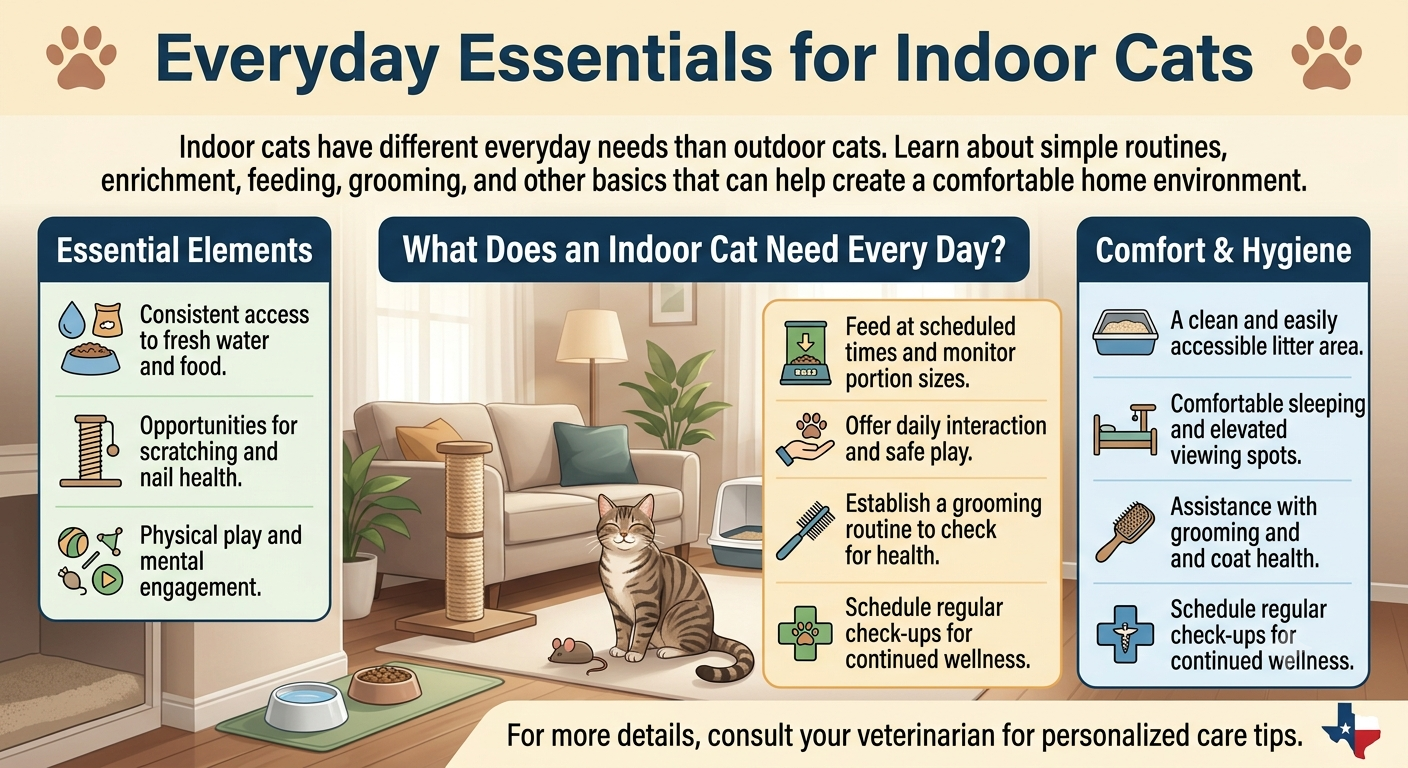
The Essentials of Indoor Cat Care
Meeting your cat’s everyday needs involves setting up predictable routines and thoughtful spaces throughout the house. Here is a look at the foundational elements of daily indoor cat care, why each matters, and how to fit them into an ordinary day.
1. Fresh Water and Regular Feeding Routines
In the wild, cats consume small meals throughout the day and get much of their hydration directly from their prey. At home, establishing a structured cat feeding routine helps regulate energy levels and provides a reassuring daily rhythm.
-
Hydration: Cats can be selective drinkers. Providing fresh water daily in clean bowls is essential. Many cats prefer water bowls placed slightly away from their food dishes, as separate locations mimic natural foraging patterns where water sources are kept distinct from feeding areas.
-
Meal Schedules: Serving measured portions at set times—such as morning and evening—helps prevent overeating compared to leaving food out constantly. It also gives your cat a clear signal for when it is time to eat, which reduces morning begging or mid-day restlessness.
2. A Clean and Accessible Litter Area
A clean litter box is vital for a cat’s comfort and hygiene. Cats are naturally fastidious animals, and a neglected box can cause unnecessary stress or lead them to search for alternative spots around the house.
-
Location: Place litter boxes in quiet, low-traffic spots where your cat can step in and out without feeling trapped or startled by noisy appliances.
-
The “N+1” Rule: A helpful standard across feline care is to provide one litter box for each cat in the house, plus one extra (for instance, two boxes for one cat, or three boxes for two cats). Spread them across different rooms or floors if possible.
-
Daily Maintenance: Scoop the box at least once a day. Performing a quick check during your morning or evening routine keeps the space fresh and inviting.
3. Daily Play and Physical Activity
Cats are natural predators wired for short bursts of energy. Without outdoor terrain to explore, indoor cats rely on their owners to provide meaningful cat exercise ideas.
-
Interactive Play: Dedicate 10 to 15 minutes once or twice a day to active play using wand toys, feather teasers, or rolling balls. Move the toy away from the cat in short, erratic movements to mimic prey.
-
Ending on a Win: Always let your cat “catch” the toy at the end of a session. Following play with a meal or a small treat satisfies the natural sequence of hunting, capturing, and eating, leaving your cat relaxed and satisfied.
4. Scratching Opportunities
Scratching is not a destructive habit; it is a fundamental biological need. Cats scratch to stretch their spine, shed the outer sheaths of their claws, and leave visual and scent markers that signify home.
-
Varied Surfaces: Offer sturdy scratching posts or horizontal cardboard pads. Make sure tall posts are rigid enough not to wobble when your cat pulls down on them.
-
Strategic Placement: Place scratching stations near entryways, sleeping spots, or next to furniture your cat might otherwise target.
5. Comfortable Places to Rest and Hide
Cats spend a large portion of the day resting, but where they rest matters. They feel most secure when they have options for both high elevation and private cover.
-
Vertical Space: Elevated perches, window seats, or sturdy cat trees satisfy a cat’s desire to look down on their environment safely.
-
Hiding Spots: Covered beds, quiet spaces under furniture, or even simple cardboard boxes lined with a soft blanket offer quiet sanctuary when the household gets busy or visitors arrive.
  [Elevated Perch / Window Seat]  -->  Surveillance & Security
  [Cardboard Box / Covered Bed]  -->  Privacy & Quiet Rest
  [Sturdy Scratching Post]       -->  Stretching & Territory Marking
6. Mental Stimulation and Environmental Enrichment
A predictable indoor space can become monotonous without variety. Indoor cat enrichment keeps your cat’s mind active and engaged throughout the day.
-
Visual Activity: Setting up a perch near a window with a bird feeder outside creates safe, continuous visual interest.
-
Foraging Activities: Instead of serving all kibble in a bowl, hide small portions in puzzle feeders or paper towel rolls around the living room to encourage natural searching behaviors.
-
Toy Rotation: Rather than leaving dozens of toys on the floor all the time, keep a small basket of toys and swap out three or four every few days to keep them feeling new.
7. Grooming and Basic Hygiene
Cats are famous for self-grooming, but human assistance makes a significant difference, particularly for long-haired breeds or senior pets.
-
Regular Brushing: A short, gentle brushing session a few times a week removes loose hair, minimizes hairballs, and serves as a quiet bonding moment.
-
Routine Checks: Brushing provides a great opportunity to check their skin, ears, and paws, as well as keeping claws trimmed to comfortable lengths.
8. Safe Spaces Around the Home
A secure indoor cat environment involves removing minor household hazards so your pet can roam freely without risk.
-
Plant Safety: Check all indoor houseplants to ensure they are non-toxic to cats (common plants like lilies are hazardous).
-
Window and Cable Security: Ensure window screens are securely fitted and latched. Secure dangling blind cords, small ingestible items like rubber bands, and exposed electrical cords in areas your cat frequents.
9. Interaction and Social Attention
While cats are often portrayed as independent, they form strong social connections with their families. Regular, low-pressure interaction builds trust and companionship.
-
Quality Time: Dedicate quiet time each day to sit with your cat, offer gentle head scratches, or speak softly to them while reading or watching TV.
-
Respecting Boundaries: Allow your cat to initiate or end social interactions on their own terms. Giving them control over when they are petted creates a calm, trusting relationship.
Designing a Simple Daily Routine
Establishing a daily timeline helps integrate these care habits naturally into your existing household schedule. Here is an example of how a simple daily cat routine might look:
|
Time of Day |
Care Activity |
Focus Area |
|---|---|---|
|
Morning |
Refill fresh water, measure breakfast, scoop litter box. |
Hydration, Nutrition, Hygiene |
|
Mid-Day |
Provide access to window perches or puzzle feeders. |
Passive Enrichment, Rest |
|
Early Evening |
Engage in 10–15 minutes of interactive play with wand toys. |
Physical Activity, Instinctual Outlets |
|
Late Evening |
Serve evening meal, offer a quick brushing session, quiet couch time. |
Social Interaction, Routine Grooming |
Bringing It All Together
Caring for an indoor cat every day relies on consistency, patience, and thoughtful preparation rather than complex tools. By providing reliable access to fresh water, clean litter space, climbing areas, scratching posts, and daily interactive play, you give your cat everything they need to feel safe and engaged. Matching these basic elements to your cat’s unique personality ensures a peaceful, rewarding routine for both of you.