Understanding Treatment Options for Severe Asthma
Asthma is a common, chronic respiratory condition characterized by inflammation and narrowing of the airways. While many individuals manage their symptoms successfully using standard daily inhalers, others experience persistent, disruptive symptoms despite consistent medication use. When asthma remains challenging to control, healthcare providers evaluate the situation through the lens of severe or difficult-to-control asthma.
Understanding the broad range of severe asthma treatment options helps patients, caregivers, and families hold informed conversations with specialists. Here is an educational overview of how severe asthma is identified, why care strategies differ, and the clinical approaches healthcare professionals consider.
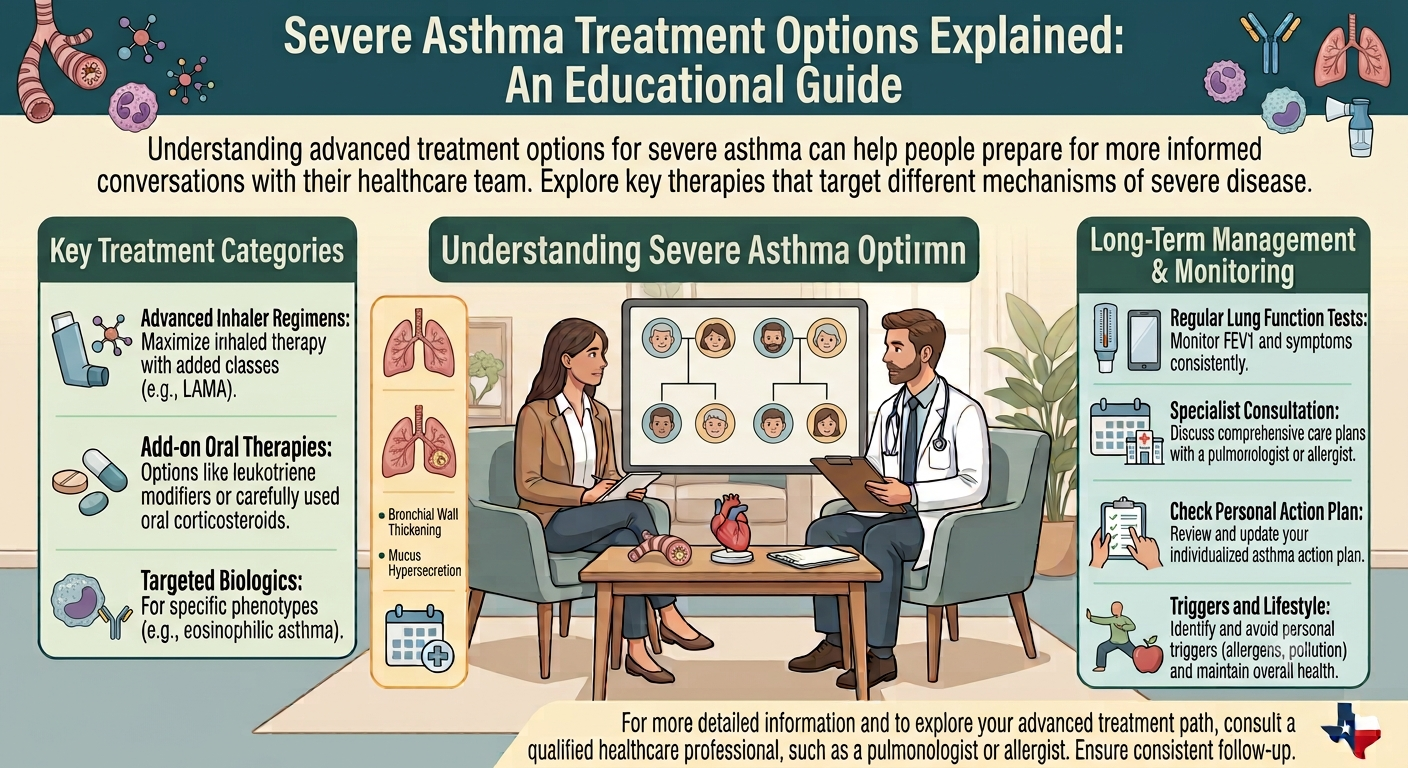
1. What Makes Asthma Severe?
To understand treatment for severe asthma, it helps to clarify how clinicians distinguish between asthma severity and asthma control:
-
Asthma Severity: Refers to the underlying intensity of the disease process before treatment is initiated or adjusted.
-
Asthma Control: Refers to the degree to which symptoms—such as wheezing, chest tightness, coughing, and shortness of breath—are minimized by current therapies.
In many cases, asthma is considered “difficult to control” because external factors—such as improper inhaler technique, unaddressed environmental triggers, or co-existing conditions (like chronic sinus infections or gastroesophageal reflux)—are interfering with medication effectiveness.
When symptoms persist even after these secondary factors are addressed and high-dose maintenance therapies are taken correctly, a healthcare provider may classify the condition as severe asthma. Individuals in this category often face frequent symptom spikes or flares (exacerbations) that require specialized medical evaluation.
2. Why Asthma Treatment Can Vary
There is no single, universal approach to managing complex respiratory conditions. When evaluating asthma treatment options, clinicians consider several individual factors:
-
Age and Overall Health: Treatment guidelines vary between young children, adolescents, adults, and older individuals.
-
Asthma Phenotype and Biomarkers: Severe asthma is not a single disease entity; it has different underlying biological drivers (phenotypes). Some forms are driven by allergic responses, while others involve specific inflammatory white blood cells, such as eosinophils.
-
Triggers and Environment: Individual sensitivities to allergens, cold air, exercise, or air pollution influence management choices.
-
Medication Response: How well an individual tolerates and responds to specific drug classes guides clinical decisions over time.
Because these factors vary significantly from person to person, finding an effective care strategy relies on careful, ongoing evaluation rather than a one-size-fits-all plan.
3. Inhaled Controller Treatments
Inhaled medications remain the foundation of severe asthma management. These therapies deliver medication directly to the airways to reduce local swelling and keep respiratory passages open.
Inhaled Corticosteroids (ICS)
Inhaled corticosteroids are the primary daily controller medications used in asthma care. They work by calming underlying airway inflammation, which reduces bronchial reactivity over time. In severe asthma care, higher doses of inhaled corticosteroids are frequently prescribed as a baseline daily management strategy.
Combination Inhaler Strategies
When an inhaled corticosteroid alone is insufficient, healthcare providers often combine it with other inhaled drug classes within a single device. Combining anti-inflammatory medications with long-acting airway relaxants helps address both structural swelling and muscle constriction simultaneously.
4. Long-Acting Bronchodilators
In addition to baseline inhaled corticosteroids, specialists often incorporate long-acting bronchodilators into a prescription regimen for difficult-to-control asthma. These medications relax the smooth muscle bands that wrap around the airways, helping to keep passages open over extended periods.
                    ┌──────────────────────────────────────────┐
                    │      Inhaled Corticosteroid (ICS)        │
                    │      Reduces Airway Inflammation         │
                    └────────────────────┬─────────────────────┘
                                         │
                                         ▼
                    ┌──────────────────────────────────────────┐
                    │     Combined with Bronchodilators        │
                    │ (LABAs or LAMAs) to Relax Airway Muscles │
                    └────────────────────┬─────────────────────┘
                                         │
                                         ▼
                    ┌──────────────────────────────────────────┐
                    │  Improved Airway Clearance & Stability   │
                    └──────────────────────────────────────────┘
Common classes of long-acting bronchodilators include:
-
Long-Acting Beta2-Agonists (LABAs): These agents stimulate specific receptors in airway smooth muscle to induce relaxation. In asthma management, LABAs are used in combination with an inhaled corticosteroid to ensure underlying inflammation is treated alongside muscle relaxation.
-
Long-Acting Muscarinic Antagonists (LAMAs): Originally developed for other chronic lung conditions, LAMAs block specific nerve signals that cause airway muscles to contract. Adding a LAMA to an existing ICS-LABA regimen (often referred to as “triple therapy”) can provide additional breathing support for select individuals.
5. Biologic Therapies
One of the most significant developments in severe asthma care over recent years is the emergence of biologic treatments for asthma. Biologics are targeted medical therapies derived from biological sources that focus on specific cellular pathways within the immune system.
How Biologics Work
Unlike broad anti-inflammatory medications, biologic agents target specific proteins, receptors, or white blood cells (such as IgE antibodies or Interleukin-5) that drive severe asthma inflammation. By blocking these key immune signals, biologics help interrupt the inflammatory cascade before it leads to severe airway swelling.
Who May Be Considered for Biologic Therapy?
Biologics are not routine treatments for mild or moderate asthma. A specialist may consider evaluating a person for biologic therapy if:
-
Symptoms remain poorly controlled despite consistent use of high-dose combination inhalers.
-
The person experiences frequent asthma flares requiring oral corticosteroid courses.
-
Blood tests or sputum evaluations reveal specific biological markers (such as elevated blood eosinophils or high IgE levels) indicating that an approved biologic matches their asthma type.
Eligibility depends entirely on an individual clinical evaluation, detailed lab testing, and specialist oversight.
6. Managing Allergens and Triggers
While severe asthma medications play a vital role, non-pharmacological strategies remain an essential component of overall care. Identifying and minimizing exposure to environmental triggers helps reduce the overall burden on sensitive airways.
Common indoor and outdoor factors that may exacerbate asthma include:
|
Trigger Category |
Common Examples |
Management Considerations |
|---|---|---|
|
Indoor Allergens |
Dust mites, pet dander, mold, pest droppings. |
Using allergen-impermeable covers, maintaining indoor humidity below 50%, utilizing HEPA air filtration. |
|
Air Irritants |
Tobacco smoke, wood smoke, chemical fumes, strong fragrances. |
Maintaining smoke-free indoor environments, avoiding scented aerosols, ensuring proper ventilation. |
|
Weather & Environment |
Cold dry air, rapid temperature shifts, high pollen counts. |
Wearing a scarf over the nose and mouth in cold weather, monitoring local pollen/air quality indexes. |
It is important to note that reducing exposure to a single trigger is rarely a complete solution for severe asthma. Trigger management works best as one layer within a broader clinical management plan.
7. Additional Evaluation and Treatment Approaches
When managing complex cases, specialists rely on advanced diagnostic tools and specialized procedures to refine care.
FeNO Testing (Fractional Exhaled Nitric Oxide)
FeNO testing is a simple breathing test that measures the amount of nitric oxide in a patient’s exhaled breath. Higher levels of nitric oxide can indicate active allergic or eosinophilic airway inflammation, helping clinicians determine whether anti-inflammatory therapies are working or require adjustment.
Allergy Evaluation & Immunotherapy
If an evaluation shows that specific outdoor or indoor allergens consistently trigger asthma flares, a specialist may recommend formal allergy testing. In select cases of allergic asthma, allergen immunotherapy (allergy shots or sublingual drops) may be evaluated to help desensitize the immune system over time.
8. Bronchial Thermoplasty
For select adult patients with persistent severe asthma that does not respond adequately to standard medication regimens, a procedure called bronchial thermoplasty may be discussed.
Bronchial thermoplasty is a minimally invasive procedure performed in a hospital setting under sedation or anesthesia. It involves delivering controlled thermal energy (heat) to the airway walls using a thin tube (bronchoscope). The goal of the heat application is to reduce the amount of excess smooth muscle tissue lining the airways, making them less prone to severe constriction during an asthma attack.
According to the National Heart, Lung, and Blood Institute (NHLBI), bronchial thermoplasty is not a routine or universally appropriate treatment. Because the procedure carries potential short-term risks—such as temporary worsening of asthma symptoms immediately following the session—its benefits and risks require careful evaluation by an experienced pulmonologist.
9. Working With a Healthcare Professional
Managing severe asthma is an ongoing, collaborative process between a patient and their medical team. Key components of effective ongoing care include:
-
Regular Treatment Reviews: Routine follow-up visits allow clinicians to assess lung function (using spirometry), review symptom history, and determine if current treatments need step-up or step-down adjustments.
-
Technique Checks: Inhaler technique significantly affects how much medication reaches the lungs. Bringing inhalers to medical appointments for routine technique checks ensures maximum medication delivery.
-
An Individualized Asthma Action Plan: A written Asthma Action Plan outlines daily management routines, clear instructions for recognizing worsening symptoms, and explicit guidelines on when to adjust medications or seek emergency care.
          ┌──────────────────────────────────────────────────┐
          │          Green Zone: Doing Well                  │
          │  • No shortness of breath or wheezing            │
          │  • Continue daily maintenance medications        │
          └────────────────────────┬─────────────────────────┘
                                   │
                                   ▼
          ┌──────────────────────────────────────────────────┐
          │          Yellow Zone: Caution                    │
          │  • Mild symptoms or reduced peak flow            │
          │  • Follow plan to adjust quick-relief care       │
          └────────────────────────┬─────────────────────────┘
                                   │
                                   ▼
          ┌──────────────────────────────────────────────────┐
          │          Red Zone: Medical Alert                 │
          │  • Severe breathing difficulty                   │
          │  • Take emergency action & seek immediate care   │
          └──────────────────────────────────────────────────┘
10. Questions to Discuss With a Healthcare Professional
When meeting with a primary care physician, pulmonologist, or allergist, having a list of structured questions can make your conversation more productive:
-
What type (phenotype) of severe asthma do I have?
-
How is my overall asthma control currently being assessed?
-
Are there underlying triggers or co-existing health conditions making my symptoms harder to control?
-
Which severe asthma treatment options are appropriate for my specific situation?
-
How often should my treatment plan and inhaler technique be reviewed?
Clear communication with a specialized healthcare provider remains the most reliable path toward understanding your options and establishing a safe, personalized management approach.