
The Ultimate Guide to 16×40 Finished Cabins
Have you ever seen a beautiful, complete cabin being transported down the highway and wondered about the story behind it? The idea of a move-in-ready home, delivered right to your land, is incredibly appealing. This guide provides all the essential information you need to know about 16×40 finished cabins.
A 16×40 finished cabin is a prefabricated or modular home that offers 640 square feet of living space. The term “finished” is key. Unlike a basic shell or kit, a finished cabin arrives at your property with the interior and exterior completely done.
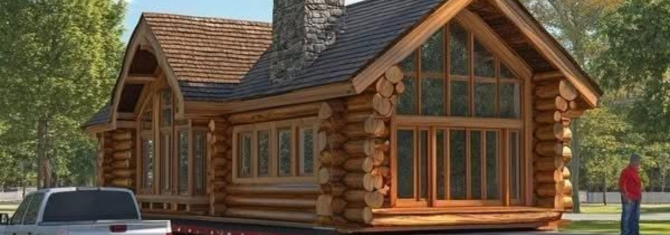
What Exactly is a 16×40 Finished Cabin?
A 16×40 finished cabin is a prefabricated or modular home that offers 640 square feet of living space. The term “finished” is key. Unlike a basic shell or kit, a finished cabin arrives at your property with the interior and exterior completely done. This means it’s built in a climate-controlled factory, which ensures a high level of quality control and a much faster construction timeline compared to a traditional on-site build.
When it arrives, a finished cabin typically includes:
-
A Complete Exterior: Siding (like the log style in the ad), roofing, windows, and doors are all installed.
-
Finished Interior: Walls are insulated and covered with drywall or wood paneling, floors are installed, and ceilings are finished.
-
Essential Utilities: The cabin is pre-wired for electricity and pre-plumbed for water and sewer connections. Fixtures like lights, outlets, sinks, a shower, and a toilet are already in place.
-
Kitchenette and Bathroom: A functional kitchen area with cabinets, countertops, and a sink is standard. A full bathroom is also a typical feature.
Essentially, once the cabin is placed on its foundation and hooked up to local utilities, it’s ready to be lived in.
Common Layouts and Uses for a 640 sq. ft. Cabin
At 640 square feet, a 16×40 cabin is surprisingly versatile. It’s larger than a tiny home but more compact than a traditional house, making it an ideal solution for many situations. Here are a few popular layouts:
-
The One-Bedroom Retreat: This is the most common layout. It features a private bedroom, a full bathroom, and an open-concept living room and kitchen area. This design feels spacious and is perfect for a single person, a couple, or as a high-end guest house.
-
The Two-Bedroom Bunkhouse: To maximize sleeping space for a family vacation spot, some designs incorporate two smaller bedrooms. These rooms might be just large enough for a queen bed or a set of bunk beds, with a shared central living area and bathroom.
-
The Open-Concept Studio: For those who prefer a more open and airy feel, a studio layout eliminates interior walls for the bedroom. This creates one large, flexible living space and can make the cabin feel much larger. It’s a great option for an artist’s studio, home office, or a simple weekend getaway.
-
Designs with Lofts: Many builders, such as Zook Cabins or Amish Cabin Company, offer lofted designs. A loft adds significant square footage without increasing the cabin’s footprint, providing extra sleeping space or a cozy storage area.
The Journey From Factory to Foundation
The image of a cabin on a flatbed truck is the most dramatic part of the process, but it’s just one step. Understanding the entire journey helps you plan accordingly.
-
Design and Build: You work with a builder to choose your model, layout, and finishes. This includes everything from the type of siding (e.g., log, vinyl, or LP SmartSide) to the color of the kitchen cabinets and the style of the flooring. The company then builds your cabin inside their factory over several weeks.
-
Site Preparation: While the cabin is being built, you are responsible for preparing your land. This is a critical and often overlooked cost. It includes clearing the land, grading it, and installing a proper foundation. Common foundation types include a concrete slab, a crawl space, or concrete piers. You will also need to arrange for utility lines (water, sewer or septic, and electricity) to be run to the site.
-
Delivery: Once complete, the cabin is loaded onto a specialized truck for transport. Delivery fees are usually calculated per mile from the factory, so distance is a major cost factor. The route must be accessible for a very large truck.
-
Placement (The “Set”): A professional crew meets the delivery truck at your property. Using a crane or other specialized equipment, they carefully lift the cabin off the truck and place it precisely onto your prepared foundation.
-
Final Hookups: After the cabin is set, it’s secured to the foundation. A local plumber and electrician will then connect the cabin’s pre-installed systems to your on-site utilities. Once these connections are inspected and approved, your cabin is officially move-in ready.
Understanding the Full Cost of a Finished Cabin
The sticker price of the cabin itself is only part of the total investment. It’s vital to budget for all the associated costs to avoid surprises.
-
Base Cabin Price: A 16×40 finished cabin can range widely in price depending on the quality of materials and level of customization. Expect a starting price of around $70,000 for a standard model and upwards of $150,000 or more for a high-end, luxury model with features like a stone fireplace, premium Pella windows, and granite countertops.
-
Delivery Fees: These can range from a few thousand dollars to over $10,000, depending on the distance and complexity of the delivery.
-
Foundation Work: The cost for a foundation can be anywhere from $5,000 to $20,000, depending on the type and local labor rates.
-
Utility Connections: Bringing water, power, and septic to a building site can be one of the most expensive parts, potentially costing $10,000 to $30,000+, especially in rural areas.
-
Permits and Site Surveys: You will need to pay for building permits from your local municipality, which can cost several hundred to a few thousand dollars.
-
Landscaping and Extras: Don’t forget to budget for things like a driveway, walkways, a porch or deck, and landscaping to complete your new home.
Frequently Asked Questions
Can you live in a 16×40 cabin all year? Absolutely. These cabins are built to modern residential building codes with full insulation packages for the walls, floor, and ceiling. They can be equipped with efficient heating and air conditioning systems, making them comfortable in any climate.
Is it hard to get financing for a finished cabin? It can be different from a traditional mortgage. Some lenders offer specific loans for modular or manufactured homes. Many builders also have partnerships with financing companies that specialize in these types of structures. It’s best to discuss financing options early in the process.
How long does the whole process take? From ordering your cabin to moving in, the process is significantly faster than a site-built home. The factory build might take 8-16 weeks. The total timeline, including site prep and delivery, can often be completed within 4 to 6 months, assuming your land is ready and permits are approved without delay.