Plunge Pool Price Guide: What to Know Before You Build
Plunge pools have become one of the most sought-after additions for modern backyards. Combining compact design with low-maintenance relaxation, these small pools fit into suburban yards, courtyards, and urban patios where a full-sized swimming pool would be impractical.
Navigating a plunge pool price guide involves assessing how pool materials, site access, equipment selection, and installation choices impact your overall budget.
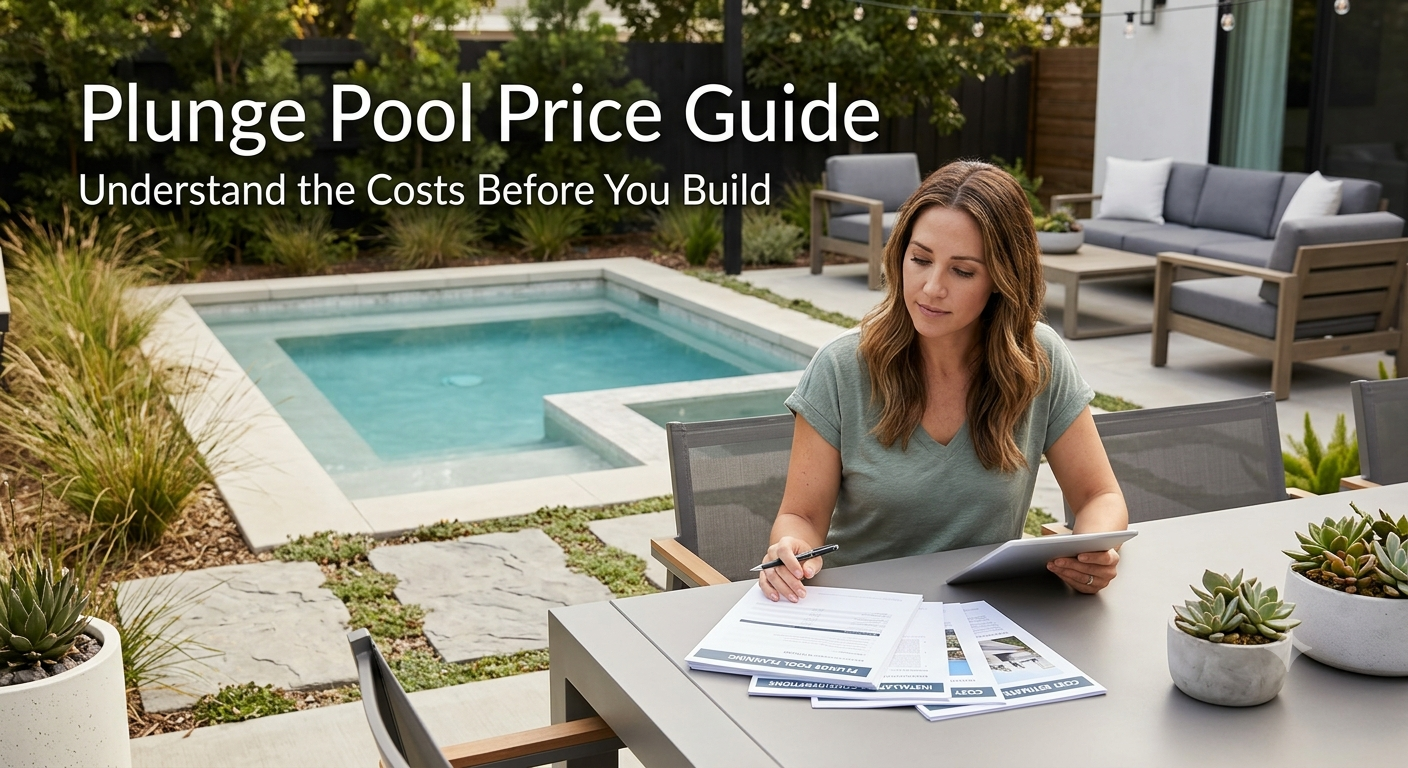
What Is a Plunge Pool?
A backyard plunge pool is a compact pool—typically measuring between 8×8 feet to 10×20 feet with a uniform depth of 4 to 5 feet—designed primarily for wading, lounging, hydrotherapy, and cooling off rather than swimming laps.
How Plunge Pools Differ from Traditional Pools
-
Footprint: Plunge pools take up a fraction of yard space compared to traditional 16×32 ft pools.
-
Water Volume: They hold significantly less water (typically 1,500 to 4,000 gallons vs. 15,000 to 30,000+ gallons for traditional pools).
-
Heating Efficiency: Due to lower water volume, plunge pools heat up quickly and retain heat efficiently, often functioning as year-round “spools” (spa-pools).
How Much Does a Plunge Pool Cost?
Plunge pool projects vary based on installation type (above-ground, semi-inground, or fully in-ground), construction materials, and regional labor rates.
In the U.S. market (2026 data), basic above-ground plunge pools generally cost between $3,000 and $15,000 installed. Fully installed in-ground plunge pools typically range from $25,000 to $50,000+, depending on custom features and site conditions. Advertised starting prices often reflect only the raw pool shell, not the complete installation.
[Total Plunge Pool Budget]
   ├── Base Pool Shell (Fiberglass, Concrete, Container)
   ├── Site Prep & Excavation (Soil conditions, slope, access)
   ├── Infrastructure (Plumbing, pumps, filtration, electrical hookup)
   └── Surrounding Work (Decking, coping, fencing, safety permits)
Main Factors That Affect Plunge Pool Prices
1. Site Preparation & Accessibility
Excavation setup, equipment transport, and soil work account for a substantial portion of overall costs.
-
Tight Access: If mini-excavators or cranes cannot easily enter your yard, manual excavation or specialized crane drops increase labor fees.
-
Soil & Slope Conditions: Rocky soil, high water tables, or sloped yards require retaining walls, soil stabilization, or specialized drainage systems.
2. Material & Construction Method
The material you choose impacts both the upfront small pool installation cost and long-term durability.
3. Equipment & Add-On Features
Adding hydrotherapy jets, LED lighting, automated chlorinators, thermal pool covers, or heat pumps enhances year-round comfort but increases capital expenditure.
4. Surrounding Finishes & Permits
Surrounding coping, decking (wood, composite, or stone), perimeter safety fencing, electrical service panel upgrades, and local building permits add to the total project cost.
Comparing Plunge Pool Types
|
Pool Type |
Typical Characteristics |
Potential Cost Factors |
Maintenance Considerations |
|---|---|---|---|
|
Fiberglass Plunge Pool |
Pre-molded factory shell; smooth, non-porous finish. |
High delivery/crane costs; fixed factory shapes. |
Extremely low; algae-resistant surface reduces chemical needs. |
|
Concrete Plunge Pool |
Custom poured or shotcrete (gunite); fully customizable shape. |
Highest labor, excavation, and tile finishing costs. |
Moderate to High; requires regular acid washing and re-plastering over time. |
|
Above-Ground Plunge Pool |
Freestanding acrylic, metal, or stock-tank setup. |
Lowest upfront cost; requires flat concrete pad. |
Moderate; exposed sides subject to weather wear. |
|
Modular / Shipping Container |
Steel container lined with fiberglass or poly liner; semi-inground flexibility. |
Delivery logistics, specialized rust-proofing, structural reinforcement. |
Low to Moderate; steel shell needs exterior protective maintenance. |
In-Ground vs. Above-Ground Plunge Pools
Choosing between an above-ground and an in-ground plunge pool installation shifts your project budget significantly:
-
Above-Ground & Semi-Inground: Requires minimal to no excavation. Placing a pre-built modular unit on a reinforced concrete pad reduces labor time and earth-moving costs, making it a popular choice for affordable plunge pools.
-
Fully In-Ground: Offers a seamless, high-end landscape appearance. However, in-ground setups incur the highest excavation, haul-away, soil retention, and safety fencing expenses.
Ongoing Maintenance and Operating Costs
A major advantage of a plunge pool is its lower lifetime operating cost compared to a traditional pool:
-
Electricity & Heating: Water volume drives heating costs. Heating a 2,000-gallon plunge pool costs a fraction of heating a full-sized 20,000-gallon pool, especially when using an energy-efficient heat pump or thermal cover.
-
Chemicals & Water: Smaller volume means significantly lower spending on chlorine, salt, or water balancers.
-
Routine Servicing: Less surface area means faster cleaning and reduced wear on filtration pumps.
Plunge Pool Budget Checklist
Use this checklist when requesting itemized estimates from local pool contractors:
-
[ ] Base Shell / Construction: Cost of the pre-molded shell or poured concrete structure.
-
[ ] Delivery & Crane Fees: Transportation logistics to get the shell to your backyard.
-
[ ] Excavation & Soil Removal: Digging, hauling away dirt, and soil stabilization.
-
[ ] Site Prep & Base Work: Gravel bed setting, concrete pad pouring, or retaining walls.
-
[ ] Plumbing & Filtration: Pump, sand/cartridge filter, skimmers, and return lines.
-
[ ] Electrical Sub-Panel & Wiring: dedicated circuit setup by a licensed electrician.
-
[ ] Heating Equipment: Electric heat pump, gas heater, or solar integration.
-
[ ] Decking & Coping: Surrounding pavers, stone coping, composite, or timber decking.
-
[ ] Safety & Permits: Local building permits, mandatory safety fencing, and self-closing gates.
-
[ ] Contingency Fund: Set aside a 10%–15% buffer for unexpected underground conditions (unmarked pipes, bedrock, high water tables).
Questions to Ask Pool Contractors
-
Does your quote cover all site excavation, dirt haul-away, and utility connections, or are those handled by subcontractors?
-
What permits, barrier requirements, and setback inspections are required by our local municipality?
-
Is a crane drop necessary to place the pool shell in my yard?
-
What equipment warranty is included for the pump, heater, and structural shell?
-
Can you provide an itemized breakdown rather than a single lump-sum figure?
FAQ
How much does a plunge pool cost?
Total costs vary by region and installation method. In the U.S., installed above-ground plunge pools range from $3,000 to $15,000, while fully installed in-ground fiberglass or concrete plunge pools generally range from $25,000 to $50,000+.
Are plunge pools cheaper than regular pools?
Upfront installation costs are slightly lower due to reduced raw materials and smaller deck footprints. However, fixed costs (excavation setup, pumps, electrical, permits) remain similar. Long-term savings on water, chemicals, and heating are where plunge pools offer significant cost advantages.
What is the cheapest type of plunge pool?
Freestanding above-ground units or stock-tank plunge pool conversions placed on a pre-existing concrete pad represent the lowest upfront cost.
How much does plunge pool installation cost?
Installation labor, excavation, plumbing, and electrical work typically account for $10,000 to $25,000 of the total project price, separate from the cost of the pool shell itself.
Are fiberglass plunge pools cheaper than concrete?
Fiberglass plunge pools generally cost less to install than custom concrete pools and require less long-term maintenance. Concrete offers unlimited custom shapes but incurs higher labor, plastering, and excavation costs.
What additional costs should homeowners expect?
Expect extra costs for local building permits, electrical panel upgrades, safety fencing/gates, dirt removal, surrounding decking, and landscaping repair.
How much does it cost to maintain a plunge pool?
Monthly chemical and electrical operating costs for a plunge pool are typically lower than a standard pool, averaging between $30 and $80 per month depending on climate, heating usage, and filter pump efficiency.
Does a plunge pool require a permit?
Yes. In most jurisdictions, any permanent pool structure holding water above a specific depth (often 18–24 inches) requires building permits, electrical inspections, and safety barrier/fencing compliance.
Conclusion
A plunge pool offers an efficient, stylish way to enjoy water feature benefits without sacrificing your entire backyard. While base shell prices can look attractive, obtaining detailed, itemized quotes from qualified local contractors is essential for understanding your true plunge pool cost. By factoring in site preparation, material trade-offs, and long-term operating costs, you can build a small pool setup tailored to your lifestyle and budget.