Learn More About The Link Between Inflammation and Eczema
Understanding the Link Between Inflammation and Eczema
Shedding light on skin health often involves untangling complex biological processes that occur just beneath the surface. Among common skin conditions, eczema stands out as one of the most widely experienced, affecting millions of adults and children worldwide. While many people recognize its characteristic dry patches or itching, fewer understand the underlying biological mechanism that drives these experiences: inflammation.
Gaining a clearer perspective on inflammation and eczema helps demystify why skin flares occur, how the immune system responds, and why personalized care plans are so essential. Here is an educational guide to how inflammatory pathways interact with the skin barrier and what science tells us about managing these dynamics.
1. What Is Eczema?
The term “eczema” does not describe a single disease. Instead, it refers to a broader family of non-contagious, inflammatory skin conditions that cause irritation, redness, dryness, and itching.
While there are several distinct forms of eczema—including contact dermatitis, dyshidrotic eczema, and seborrheic dermatitis—the most common and chronic form is atopic dermatitis.
-
Atopic: Refers to a hereditary tendency toward hyper-reactive immune responses (often linked with conditions like asthma or seasonal allergies).
-
Dermatitis: Simply translates to “inflammation of the skin.”
In individuals with atopic dermatitis, the skin experiences recurring periods of active symptoms (flares) followed by periods where the skin appears calmer (remission). Understanding this cycle begins with examining the body’s natural defensive responses.
2. What Is Inflammation?
To understand eczema inflammation, it helps to look at what inflammation actually is. At its core, inflammation is a fundamental biological defense mechanism orchestrated by the immune system.
When the body encounters a potential threat—such as a virus, bacteria, or physical injury—the immune system sends white blood cells and biochemical signals (such as cytokines) to the affected area. This response increases blood flow, recruits protective cells, and helps repair damaged tissue.
Normal Immune Response:
Threat Detected  ──> Controlled Inflammation  ──> Threat Cleared  ──> Resolution

Inflammatory Skin Condition (e.g., Eczema):
Trigger / Disruption  ──> Overactive Immune Signal  ──> Continuous Skin Inflammation
Under normal circumstances, the immune system turns off this inflammatory response once the threat is resolved. However, in chronic inflammatory skin conditions, the inflammatory signaling system remains active longer than necessary or responds to minor everyday stimuli as if they were major threats.
3. How Inflammation Relates to Eczema
The biological connection between the eczema and immune system pathways is central to how symptoms develop. The National Eczema Association notes that immune system dysfunction contributes directly to underlying inflammation, which in turn drives the primary visible and physical symptoms of eczema.
When the immune system in the skin becomes overactive:
-
Chemical Signaling Spikes: Immune cells in the skin release elevated levels of inflammatory proteins (cytokines).
-
Nerve Fibers React: These inflammatory chemical signals stimulate sensitive nerve endings in the skin, sending strong “itch” signals directly to the brain.
-
Physical Changes Occur: Increased blood flow and fluid movement in response to inflammatory signals lead to local swelling, redness, and heat.
This creates what dermatologists often call the “itch-scratch cycle.” Biological atopic dermatitis inflammation produces an intense itch; scratching the skin temporarily relieves the sensation but damages physical tissue, which triggers more immune activity and further what causes eczema inflammation to escalate.
4. The Skin Barrier and Inflammation
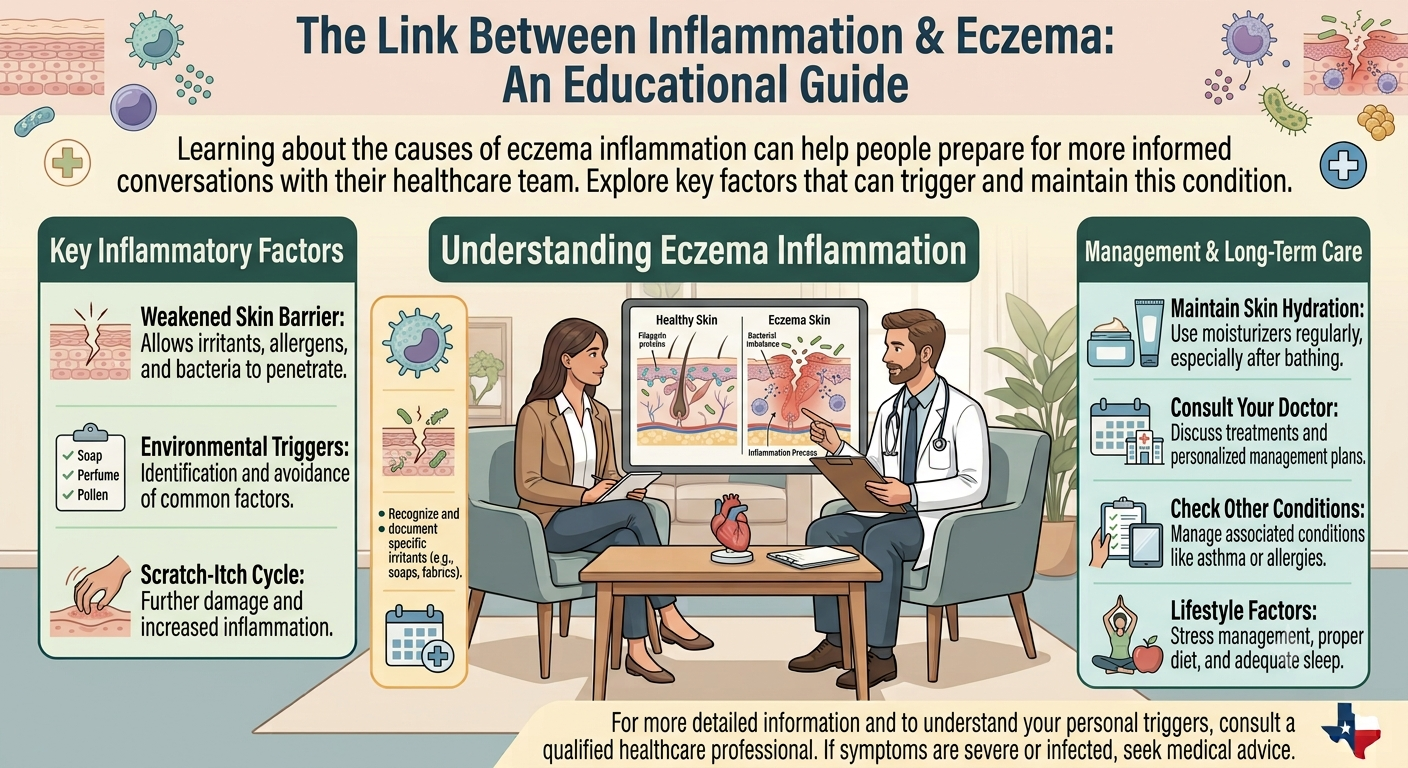
To fully grasp how eczema flares develop, it is vital to examine the physical structure of healthy skin versus skin affected by eczema. Healthy skin functions much like a sturdy brick-and-mortar wall:
-
Skin Cells (Bricks): Provide physical structure and shield underlying layers.
-
Lipids and Proteins (Mortar): Retain moisture and seal out environmental pollutants, microbes, and irritants. Key structural proteins, such as filaggrin, help maintain this tight seal.
Healthy Skin Barrier:
[ Cell ] [ Lipid Seal ] [ Cell ]  <── Moisture Retained / Irritants Blocked

Disrupted Barrier (Eczema):
[ Cell ]   ( Gap )   [ Cell ]    <── Moisture Escapes / Irritants Enter
                                        │
                                        ▼
                           Triggers Immune Response (Inflammation)
In people with eczema, genetic variations or environmental factors often cause structural weaknesses in this protective outer barrier. Water escapes rapidly—leading to intense dryness—while external irritants, allergens, and microbes easily pass through the gaps. Once inside, these foreign elements meet underlying immune cells, sparking an immediate inflammatory reaction that further weakens the barrier.
5. What Can Trigger Eczema Flares?
While internal immune signaling creates the baseline tendency for skin inflammation, external or internal factors often act as catalysts, leading to noticeable symptom spikes. Common eczema triggers include:
-
Environmental Changes: Low humidity during cold winter months, extreme heat leading to sweating, or sudden fluctuations in temperature.
-
Topical Irritants: Synthetic fragrances, harsh laundry detergents, antibacterial soaps, or household cleaning chemicals.
-
Textiles and Fabrics: Coarse materials like wool or rough synthetic fibers that create physical friction against vulnerable skin.
-
Allergens: Environmental allergens like dust mites, pet dander, mold, or pollen.
-
Emotional Stress: Psychological stress prompts the body to release hormones like cortisol, which can alter immune function and heighten inflammatory signaling in the skin.
Because every person’s immune profile and skin barrier integrity are unique, triggers vary significantly from individual to individual. What prompts a flare in one person may have no impact on another.
6. Why Eczema Symptoms Can Vary
Understanding eczema symptoms requires recognizing that the condition does not look or feel the same for everyone. The physical presentation of eczema changes based on several key variables:
|
Factor |
How It Affects Symptom Presentation |
|---|---|
|
Skin Tone |
On lighter skin tones, inflammation often appears as pink or bright red patches. On darker skin tones, affected areas may look purple, dark brown, or ashen grey, making redness less obvious. |
|
Severity & Duration |
Acute flares present with weeping, crusting, or tiny bumps. Long-term (chronic) inflammation causes lichenification—where skin becomes thick, leathery, and accentuated with deep lines. |
|
Body Location |
In infants, eczema frequently appears on the face and scalp. In older children and adults, it commonly concentrates on joint creases (inside elbows, behind knees), wrists, hands, and neck. |
|
Eczema Type |
Different sub-types manifest uniquely; for instance, dyshidrotic eczema specifically forms small, intensely itchy blisters on the sides of fingers, palms, or soles of feet. |
7. Understanding Eczema Management
Because inflammation and barrier disruption work together, healthcare professionals generally take a multi-faceted, layered approach to managing eczema rather than relying on a single solution.
Comprehensive management strategies evaluated by medical providers typically involve:
-
Gentle Skin Barrier Maintenance: Consistent use of thick, fragrance-free moisturizers (ointments or creams) immediately after bathing helps trap moisture and support the compromised outer barrier.
-
Identifying and Avoiding Personal Triggers: Keeping a daily log of activities, products, and environmental exposures can help identify specific factors that spark inflammatory responses.
-
Gentle Cleansing Practices: Using lukewarm water instead of hot water and choosing soap-free, mild cleansers prevents stripping natural lipids from delicate skin.
-
Clinical Therapies: Depending on severity, dermatologists may prescribe targeted topical or systemic medical therapies designed specifically to calm overactive immune signaling pathways and control persistent inflammation.
Managing eczema is an ongoing process focused on stabilizing the skin barrier and reducing flare frequency, rather than seeking a permanent “cure.”
8. When to Talk With a Healthcare Professional
Skin changes can be uncomfortable and disruptive. It is always best to seek a professional evaluation from a primary care physician or board-certified dermatologist if you experience:
-
Persistent, unexplained skin dryness, itching, or irritation that interferes with daily activity or sleep.
-
Skin symptoms that worsen rapidly or fail to improve with gentle basic skincare routines.
-
Signs of potential skin infection, such as increased warmth, severe pain, yellow crusting, oozing, or red streaks extending from the area.
-
Skin concerns in infants or young children.
A qualified healthcare professional can provide an accurate diagnosis, rule out other conditions with similar symptoms, and create a safe, personalized care plan tailored to your skin’s unique needs.