How to Use Vinegar for Weed Control
Using vinegar for weeds has become a popular topic among gardeners looking for alternatives to traditional chemical herbicides. While household pantry staples can play a role in yard maintenance, understanding how acetic acid acts on plant tissue—and recognizing its limitations—is essential before filling a spray bottle.
If you are curious about how to kill weeds with vinegar, this guide breaks down how it works, how to apply it responsibly, critical safety precautions, and alternative weed removal methods.
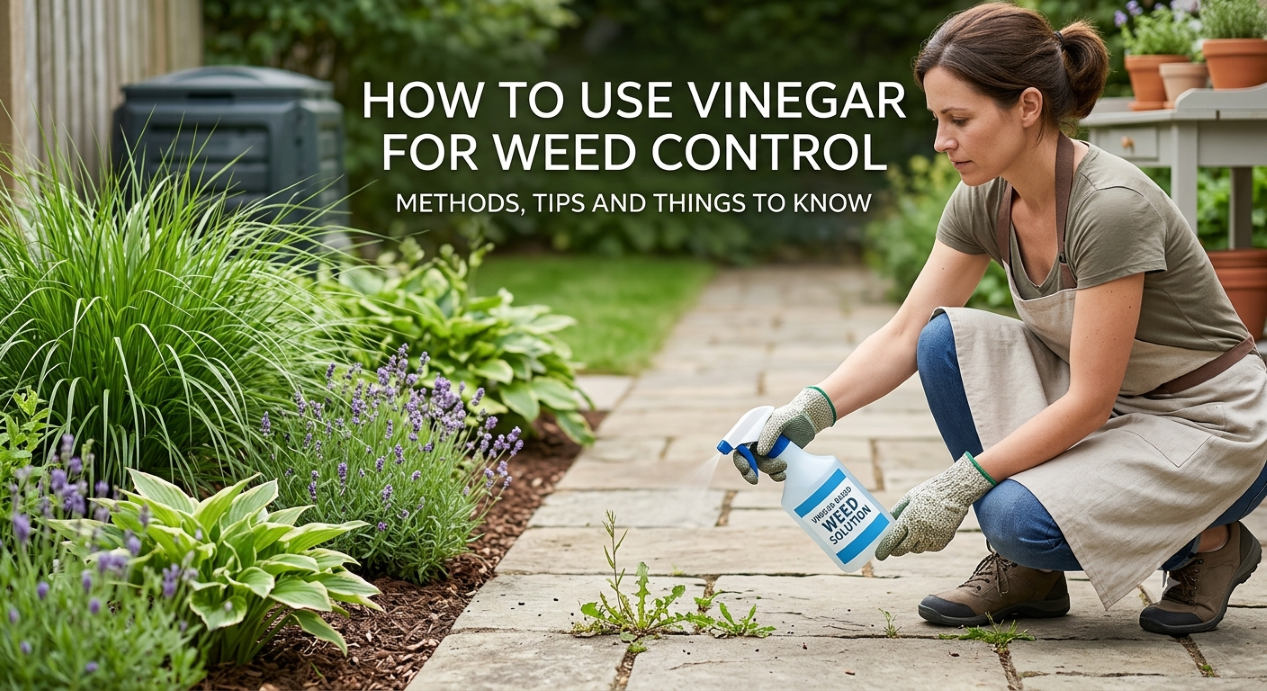
Can Vinegar Help Control Weeds?
Yes, vinegar can destroy top foliage, but it behaves differently from systemic weed killers.
Vinegar acts strictly as a contact herbicide. When applied to leaves and stems, the acetic acid breaks down the protective waxy coating on plant surfaces, forcing plant cells to dry out and wither.
-
What it does well: Rapidly burns down visible green growth on young, broadleaf weeds.
-
What it does not do: It generally does not travel down into root systems, meaning persistent weeds can sprout fresh leaves after treatment.
How Vinegar Affects Weeds
The effectiveness of a vinegar weed killer depends heavily on weed type and plant maturity:
-
Young Annual Weeds: Small, newly germinated weeds with shallow root systems (such as small dandelion seedlings or chickweed) succumb quickly because destroying foliage exhausts the plant.
-
Established Perennial Weeds: Mature weeds with deep taproots (like mature dandelions, wild ivy, or thistle) will lose their top leaves, but their underground roots will typically push up new growth within days or weeks.
Household Vinegar vs. Horticultural Vinegar
Understanding the difference between pantry items and commercial agricultural products is critical for both success and safety.
Household Vinegar (Pantry)              Horticultural Vinegar (Commercial)
  [5% Acetic Acid Concentration]          [20% to 30% Acetic Acid Concentration]
  • Low toxicity                           • Corrosive skin/eye hazard
  • Slow, limited weed top-burn            • Rapid foliar burn down
  • Safe for kitchen use                   • Strict PPE required (gloves, goggles)
-
Household Vinegar (5% Acetic Acid): Standard culinary vinegar is mild. It may scorch small tender weeds in hot sunlight but generally lacks the potency to clear tough broadleaf weeds.
-
Horticultural Vinegar (20% to 30% Acetic Acid): Specifically formulated as a herbicide. It is significantly more potent, but the higher concentration carries serious personal safety risks.
Safety Warning: Concentrated horticultural vinegar (20–30% acetic acid) is corrosive. It can cause permanent eye damage, severe skin burns, and respiratory irritation. Always wear protective eyewear, long sleeves, nitrile gloves, and closed-toe shoes, and follow the product label instructions precisely.
How to Apply Vinegar for Weed Control
When using acetic acid for homemade weed control, proper timing and application techniques maximize foliage contact while protecting surrounding garden beds.
-
Choose a Sunny, Calm Day: Apply when temperatures are warm and direct sunlight hits the target area. Sun accelerates the desiccation process. Avoid windy days to prevent drift onto desirable lawn grass or garden plants.
-
Target Spot Treatments: Apply directly to weed leaves using a pump sprayer or spray bottle set to a direct stream rather than a fine mist.
-
Avoid Spraying Desirable Plants: Vinegar is non-selective—it will scorch or kill desirable flowers, vegetables, and turfgrass just as readily as weeds.
-
Allow Dry Time: Ensure rain is not forecasted for at least 24 to 48 hours after application so the acid remains on foliage long enough to act.
-
Reapply as Needed: Repeat applications may be necessary when new green shoots emerge on taprooted weeds.
Which Weeds May Be More Difficult to Control?
Certain plant structures make weeds resistant to simple contact burndown:
-
Deep Taproots: Dandelions, burdock, and horseradish store energy deep underground.
-
Waxy Leaves: Weeds like broadleaf plantain possess thick leaf coatings that repel water-based sprays.
-
Rhizomatous Grasses: Nutsedge and crabgrass spread through underground runners that contact sprays cannot eradicate.
Important Safety and Garden Considerations
While vinegar is a familiar substance, improper use can negatively impact your landscape and health:
-
Soil Impact: Repeated heavy applications of high-concentration acetic acid can temporarily lower soil pH in localized areas, making it difficult for desirable plants to thrive.
-
Over-Spray Hazards: Avoid using near decorative stonework, marble, or unsealed concrete, as acid can etch masonry surfaces.
-
Chemical Incompatibility: Never mix vinegar with household bleach or ammonia. Combining acetic acid with bleach releases toxic chlorine gas, which poses severe health hazards.
Common Mistakes to Avoid
-
Expecting Permanent Root Control: Treating vinegar as a permanent root-killing solution leads to frustration when perennials return.
-
Spraying on Breezy Days: Wind drift can inadvertently damage prized garden flowers or create yellow patches in lawn turf.
-
Ignoring Label Protections: Using commercial 20% or 30% horticultural vinegar without safety goggles or rubber gloves exposes you to hazardous chemical burns.
-
Soaking the Soil: Spray the foliage, not the dirt. Drenching soil wastes product and risks damaging beneficial soil micro-organisms.
Weed Control Methods Comparison
|
Method |
Best Use |
Advantages |
Limitations |
|---|---|---|---|
|
Vinegar (Contact Spray) |
Paver cracks, driveways, patio weeds |
Fast top-burn on young foliage |
Does not destroy roots; non-selective |
|
Hand Removal / Weeding |
Small garden beds, deep taproots |
Removes root system entirely |
Labor-intensive; labor increases with yard size |
|
Organic Mulch |
Flower beds, vegetable gardens |
Prevents seed germination; retains moisture |
Must be replenished periodically |
|
Landscape Fabric |
Pathways, beneath gravel beds |
Long-term weed barrier |
Can degrade; weeds may root on top of fabric |
|
Labeled Herbicides |
Tough perennials, large lawn areas |
Targeted or systemic root control |
Requires strict adherence to safety labels |
Other Natural Weed Control Methods to Consider
Combining multiple natural weed control methods yields far better results than relying on sprays alone:
-
Mulching: Applying a 2- to 3-inch layer of wood chips, bark, or straw blocks sunlight, preventing dormant weed seeds from sprouting.
-
Manual Removal: Using a fishtail weeding tool to pull taproots out intact remains the most reliable method for clearing dandelions and thistles.
-
Boiling Water: Pouring boiling water directly into driveway or sidewalk cracks cooks both foliage and root tissue for small isolated weeds.
Questions to Ask Before Using Vinegar for Weeds
-
[ ] Am I using household vinegar (5%) or concentrated horticultural vinegar (20%+)?
-
[ ] Have I put on appropriate protective equipment (goggles, gloves, long sleeves)?
-
[ ] Is the weather sunny, dry, and wind-free today?
-
[ ] Are desirable plants far enough away to prevent overspray damage?
-
[ ] Is the weed a young annual or an established perennial with a deep root system?
Frequently Asked Questions
Will vinegar kill grass?
Yes. Acetic acid is a non-selective contact treatment. If you spray vinegar on your lawn, it will burn and brown the turfgrass along with the weeds.
How long does it take for vinegar to work on weeds?
Under direct sunlight and warm temperatures, top-burn signs (browning and wilting) often appear within a few hours to 24 hours after application.
Can I mix vinegar with salt and dish soap?
Many homemade recipes mix vinegar, table salt, and liquid soap. While soap acts as a surfactant (helping the spray stick to leaves) and salt desiccates tissue, salt accumulates in the soil and can prevent any future plant growth in that spot for long periods. Use salt mixtures cautiously and only on driveways or gravel paths where no future planting is planned.
Does household 5% vinegar kill weed roots?
No. Standard 5% kitchen vinegar generally only damages the leaf tissue it touches. It rarely penetrates deep into subterranean roots.
Is horticultural vinegar safe for pets?
Concentrated 20% to 30% acetic acid poses contact hazards while wet. Keep pets and children completely out of the treated area until the spray has thoroughly dried, and always follow product label directions for safety clearance.
Using Vinegar Responsibly
Vinegar can be a useful tool in your garden toolkit—especially for burning down young weeds in driveway cracks, gravel paths, and patio seams. However, because it acts purely as a contact foliage spray and does not target subterranean roots, setting realistic expectations is key.
By selecting the right tool for your weed type, protecting desirable landscape plants from drift, and adhering strictly to safety guidelines, you can maintain clean, managed garden spaces efficiently.