Guide to Know About Natural Ways to Soothe Dry Eye Symptoms
Managing dry eye symptoms effectively relies on a combination of environmental adjustments, conscious eye-care habits, and non-prescription tear support. Dry eye syndrome is typically a chronic condition rather than a temporary issue that can be “cured” with home remedies; however, supportive daily habits can significantly improve tear film stability and daily comfort.
Why Dry Eye Occurs & Environmental Triggers
Dry eyes occur when your eyes either do not produce enough tears or produce poor-quality tears that evaporate too quickly. A healthy tear film requires three balanced layers: water for moisture, mucin to spread the tears, and oil (produced by the meibomian glands along your eyelids) to prevent rapid evaporation.
Common daily triggers that accelerate tear evaporation or inflame the eye surface include:
-
Low Humidity & Airflow: Indoor heating, air conditioning, desktop fans, and vehicle blowers.
-
Air Pollutants: Cigarette smoke, outdoor dust, and urban smog.
-
Reduced Blinking: Staring continuously at digital screens, reading material, or the road while driving.
Everyday Habits to Reduce Eye Strain and Evaporation
                 [ Everyday Lifestyle Adjustments ]
                                 |
       +-------------------------+-------------------------+
       |                                                   |
[ Digital Habits ]                                 [ Environmental Shielding ]
       |                                                   |
• Follow the 20-20-20 Rule                         • Run a cool-mist humidifier
• Practice complete, intentional blinks             • Wear wraparound sunglasses outdoors
• Position screens below eye level                 • Redirect AC and heater vents away
-
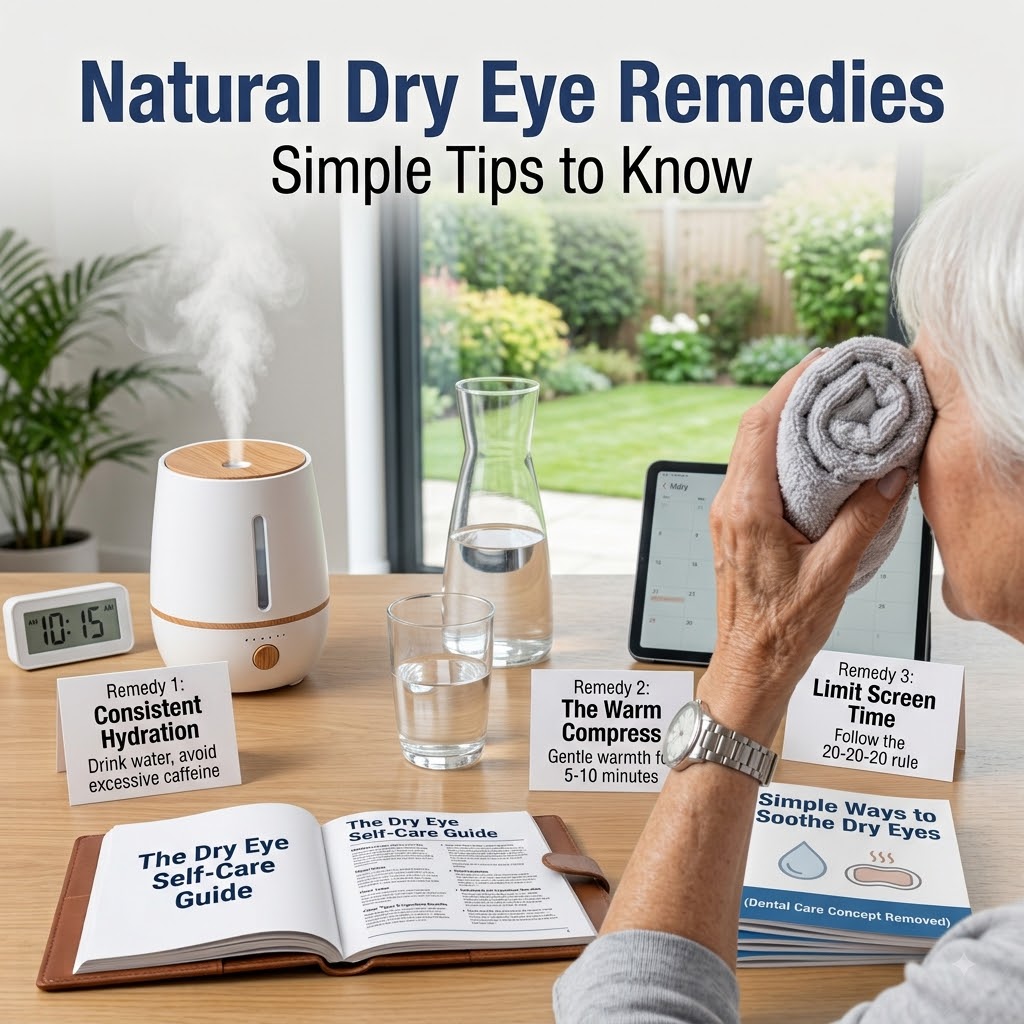
The 20-20-20 Rule & Conscious Blinking: Staring at screens reduces normal blink rates by up to 50%. Every 20 minutes, pause to look at an object 20 feet away for 20 seconds. Focus on making full, gentle blinks to press fresh oil from the eyelid glands across the cornea.
-
Humidification: Adding a cool-mist humidifier to your bedroom or office maintains ambient moisture, slowing down tear evaporation indoors.
-
Wraparound Eyewear: Standard glasses allow wind and ambient air to flow around the sides. Wraparound sunglasses create a physical barrier that traps moisture and shields the eyes from wind and outdoor pollutants.
Eyelid Hygiene, Warm Compresses, and Diet
A major contributor to dry eye is meibomian gland dysfunction (MGD), where the oil-producing glands along the lash line become blocked.
Step 1: Apply a warm, damp cloth to closed eyelids for 5 to 10 minutes to melt hardened oils.
Step 2: Cleanse the eyelid margins with a mild, eyelid-safe cleanser to clear debris.
Step 3: Gently massage upper lids downward and lower lids upward toward the lash line.
-
Warm Compresses: Applying a warm, clean washcloth over closed eyelids for 5 to 10 minutes softens hardened oil blockages, allowing natural lipids to flow into your tear film.
-
Gentle Lid Cleaning: Washing the eyelids and lashes with warm water or dedicated eyelid wipes removes bacteria and buildup that destabilize tears.
-
Hydration & Balanced Nutrition: Drinking sufficient water supports baseline fluid levels. Incorporating omega-3 fatty acids (found in salmon, flaxseed, chia seeds, and walnuts) into your diet may help support healthy oil gland function and reduce surface inflammation.
Safety Note: Never apply unsterile liquids, home-mixed herbal extracts, or pure oils directly inside the eye socket. Stick to warm water or sterile products designed specifically for ophthalmic use.
Over-the-Counter Options: Artificial Tears, Gels, and Ointments
When lifestyle changes aren’t enough, non-prescription lubricating eye drops help supplement natural tear production:
|
Product Type |
Form & Consistency |
Best Use Case |
|---|---|---|
|
Preservative-Free Artificial Tears |
Thin, watery liquid |
Mild-to-moderate dryness throughout the day; safe for frequent use. |
|
Lubricating Gels |
Thicker liquid/viscous gel |
Moderate-to-severe dryness; provides longer-lasting relief with mild, temporary blurriness. |
|
Ophthalmic Ointments |
Thick, petrolatum-based ointment |
Severe overnight dryness; applied before sleep as it blurs vision temporarily. |
Avoid “redness-relief” vasoconstrictor drops, which treat cosmetic redness rather than dryness and can cause rebound inflammation with frequent use.
When to See an Eye-Care Professional
While lifestyle management works well for mild dryness, persistent or severe symptoms require an evaluation by an optometrist or ophthalmologist. Schedule an appointment if you experience:
-
Persistent Pain or Grittiness: Pain, severe burning, or feeling like sand is trapped in your eye that does not improve with lubricating drops.
-
Visual Changes: Blurry, fluctuating, or declining vision that interferes with daily tasks.
-
Redness or Swelling: Heavy redness, discharge, crusting, or eyelid swelling that could signal an infection or underlying inflammation.
-
Lack of Relief: Symptoms that persist despite several weeks of consistent warm compresses and environmental adjustments.